Sunday, January 26, 2014

Sport Psychology and Music

I have been away for awhile and I am working on some pretty exciting stuff.  But this morning, I am inspired to revisit a topic that fascinates our industry.

It is without a doubt, in the world of high level performance mental training and thought are very important. In the music industry we have taken inspiration from the Inner Game of Tennis and Outliers.  Both of these books outline the mental and physical preparation it takes to achieve in competitive sports.

With the Olympics around the corner, I have always been more excited about the preparation of these athletes.  What they have achieved with their mind and bodies is unequaled in the human existence and can only be described as awe-inspiring.

I have been talking about Lindsey Vonn's documentary on Netflix for years. She can only train for her sport, skiing, for three months every year.  In her documentary she discusses cross training and other summer activities.  However, the most inspiring moment in the film is when she finally starts taking practice runs.  You would think, she is take as many as possible every day.

Instead, seven runs a day, with three coaches, four or five video cameras, and an entire line of ski equipment to choose from.  If high level audition training had that much thought, think what we could achieve.  (Get as close as you can, record yourself)

Also, musicians are wimps.  We loose on average 17 auditions before winning 1.  We all know musicians who after 5 or 6 auditions, throw in the towel or crash under the mental pressure.  At least we don't physically hurt ourselves.

Winter sport athletes are insane. Lindsey Vonn crashed in Japan and was told she might be able to walk in a few months.  Instead she finished all of her events in the Olympics that week.  This morning I saw Simon Dumont promo video for freestyle skiing.  Listen to his list of injuries then tell me winning an audition is too difficult.


Sunday, September 8, 2013

The Time It Takes Makes Us Interesting

Will Timmons is a great friend of mine.  We actually started our blogs on the same day without consulting each other.  The purpose of each blog was to discuss aspects of music and the music industry in an attempt to digest our thoughts and encourage others.  This post is in response to a recent blog of his: Life Takes Time For Some of Us. 

Will's point is very valid and he is attempting to encourage the millennial generation currently searching desperately to find its place professionally.  Notice, I did not say searching to find itself.

The facts about youth unemployment are overwhelming, not only in music but across our generation.

The first years out of college can be incredibly depressing.  For many people, this is the first time we are not around people exactly like us, other students of the same age, regional background, and subject area.  This is the first time we have to explore strange new work places, seek out new people and to boldly search for motivation.

Those of us lucky enough to have salaries are often at the bottom of a totem pole and exist in a predetermined job description.  Speaking with friends across fields and careers, they often find these jobs disappointing in their level of creativity, output, innovation, and freedom of thought.  So much effort is put on the "grammar" of fitting in, (dress right, be on time....etc.) little time can be spent on creation.

We need to stop asking our parents' generation for everything. We need to stop attempting to fit in.  We need to express ourselves creatively and courageously.  We need to DO.

These precious years between university and "professionalism" can be spent on a verity of activities.  It takes time to develop the vocabulary, poise, relationships, connections, and wisdom needed for innovation and articulate entrepreneurship .  But, all of these things come from doing, thought, and doing again.

If you are trained as an artist, make art.  Make bad art, but show your art and practice.  If you are a musician, play music.  Play lots of music.  Organize concerts. Perform. PRACTICE.

"Pre-professionals" (A term I think is crap forced on us by a strict and moldy generation) have something salaried people don't...TIME.

You have a degree in a field.  You have an expertise you thought worthy of pursuing.  USE IT.  You are a professional.

Young professionals have to practice to fit into a professional mold. And yes, everyone has to practice.  We have to practice more than our distinguished colleagues because they have years of wisdom.  But, don't be shy about calling yourself a professional.  YOU ARE.

The interesting characteristics of people are those that don't fit our expectations. Those people audacious enough to be themselves and to create, those people are the beautiful people.  Our generation needs confidence and a kick in the ass...go innovate. GO DO.

Friday, August 23, 2013

Advice for Young Musicians

This week a student of mine expressed interest in a music degree.  This is an intelligent high school student, however, his question went beyond the normal private lessons response. Specifically he asked about how to start studying theory and other aspects of music.

This is a massive undertaking and I think the music education complex does a very poor job at developing a comprehensive view of the industry. There are a few overlooked steps by many aspiring musicians.

Listen to everything....listen both as a passive listener and critically to all styles of music. Aaron Copland's book, "What to Listen for in Music" is a compilation of lectures to describe the benefits oh listen in different ways.

Perform Often....a few years ago I was able to interview the low brass teachers at the Aspen Music Festival and School.  Discovering a Classical Musician looked into the lives of five prominent musicians. John Rojak's interview was incredible insightful because he did not get into his first choice music school.  His first three years of undergraduate work were spent performing with local groups in Connecticut. These years allowed him to develop courage performing in various styles that eventually lead to his broadway career.

Research the Industry....find out how big the music industry is.  Music provides jobs for recording engineers, stage hands, producers, administrators, journalists, conductors, college professors, historians, public school teachers, and instrumentalist is a huge variety of genres.  All of these professions demand a high level of execution and musical understanding.

Use the Internet...there is a growing number of free course work websites. Coursera, as well as other sites, offer introductory courses in theory, history, and even jazz improvisation.  There are even period and style specific courses offered from some incredible schools.  A course in the history of rock 'n roll can be beneficial by increasing your vocabulary and make it easier to discuss music with non-musicians.

Read everything....expand your knowledge.  Read everything from program notes to biographies. Composers have lead some fascinating lives and sometimes their biographies read like a soap opera. Also start following the blogs of your favorite performers.  Some of the worlds top musicians write about the industry and musical thoughts every week.  Books like "Mozart in the Jungle" can also lead to an glamorous view of the industry.

Go to Live Performances....you have to be inspired and understand what music is.  A live performance offers so much more than a recording.  Seek out different styles of concerts, attend recitals, jazz pubs, symphony orchestras and even punk rock shows. After the concert go back stage and congratulate the performers.  This is a great way to meet musicians.

All of these activity will lead to a comprehensive view of the industry and allow aspiring musicians to make choices that will affect their careers.  Having a clear picture and a depth of insight will direct you through choices that will determine your life.  But always remember, have fun, respect your colleagues and be gracious to your audience.

Friday, July 12, 2013

Trio for Soprano Sax, Bass Trombone, and Piano

Youtube Video
July 4th Concert
Enschede, the Netherlands

I had the pleasure of working with Iris Gruber and Hans van der Werf on Daniel Schnyder's Trio.  This piece marked a huge development in my growth as a musician.  The jazz inspired style combined with technically challenging rhythms and the wide tessitura were demanding. However, Iris and Hans created a working atmosphere where we could focus on style.  Overall the experience was very enjoyable.

We performed the piece three times

July 2, 2013 on Iris' Endexam
July 4, 2013 on my recital
July 10, 2013 on a graduation concert.

While working on the piece I had the pleasure of visiting Stefan Schulz in Berlin.  Stefan is a good friend of the composer and the two perform together regularly.  We spoke about some technical aspects, but Stefan had nothing but great things to say about Daniel's music.

Wednesday, May 22, 2013

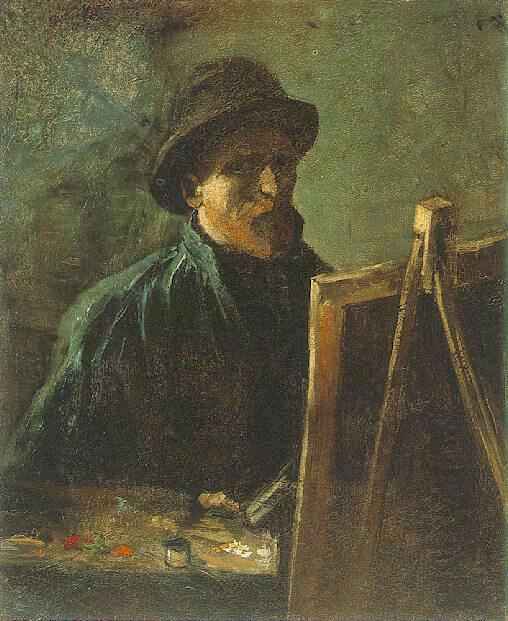
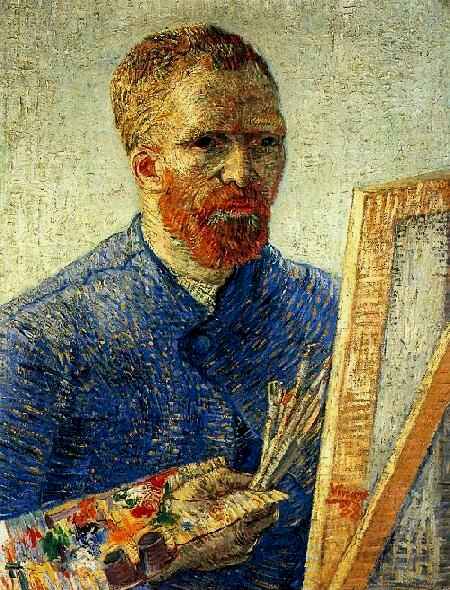
Van Gogh: At Work

Last week, I took a second trip to the Van Gogh museum in Amsterdam.  I visited last winter when his paintings were being exhibited in a different building.  The new Van Gogh Museum just opened at the beginning of May.  The title of the new exhibit: Van Gogh: At Work.

1886

The exhibit attempts to give a comprehensive view of Van Gogh's development through different styles.  A lot of space is devoted to his education.  This collection of drawings and paintings are incredibly interesting.  You can see examples of sketches, color experiments, different brush strokes, and varying angles of the same subjects.

1888

Take these two self portraits: same subject completely different style.

In music we attempt to do the same thing when we study.  We isolate different technics or licks and we practice them in different ways.  However, our study is mostly refinement based.  The huge difference, Van Gogh actively thought about what he wanted and had to drastically change his craft in order to achieve his goals.

Think about what you play and why you play it.  Decide on meaning and let that effect style.  Once you can hear exactly what you want, then the craft will be clean and meaningful.

Wednesday, December 5, 2012

Is Practicing Becoming Tedious?

Recently, I have been talking to a former student who has found practicing tedious. The first thing you should know is, practicing is tedious, sometimes taking years to achieve our goals. Classical music is unique in the level of craft and artistry, not to mention the pressure of repeating that high level in real time...every time. This takes practice and there is no way around it.


However, there are ways to have fun and stay interested in practicing.

  1. Be around other musicians and friends. A very close friend of mine told me to go to the school with the best people, and that's what I did. At USC and at CCM we had a group of energetic young students that consistently played for and with each other. Having a discussion about where you are and where you want to go is the best way to get there.
  2. Listen to great music. This step is often over looked in music school, who has time to listen to a symphony when you have a lesson tomorrow. However, this is the only way to figure out what music is. If you can listen to live music, that's better. And take in a variety of genres.
  3. Be creative in your practice routine. Know what and why you work on things in your daily routine. This way you can change the content and still work on the same thing. Instead of playing Rochut, play actual songs. If you are working on articulations, play some jazz.
  4. Be creative with your “truth boxes.” Playing for a metronome, tuner, and recording device can drive anyone nuts. Instead of the metronome use a beat, design your own for specific piece, or use something you find on a keyboard. Change the style of beat to fit the music. You can also use a drone or play along with a recording. You will know if you are out of tune.

If you can't listen to live music check out these places for current performances.

There are lots of etude books that use a CD.  Play with them.


Last, but not least, make sure you are having fun away from the trombone.  Exercise, join the gym, play an organized game or convince your teacher to play Ultimate Frisbee with the studio.

In a masterclass today, I heard a teacher demand a student take a day off.

Wednesday, September 19, 2012

Kickstarter: Not Mine

Everyone that reads this blog is familiar with Kickstarter, the fundraising site that funded Discovering a Classical Musician.  Two days ago, a friend of mine launched her own project.  Tromboteam, along with nine composers, are raising money for new trombone quartets.

I have known Sarah Paradis, the fifth member of Tromboteam, for almost three years.  We attended the Aspen Music Festival together, and this past spring, she hosted me at the University of Bemidji.  I have always been impressed with her playing.  However, this project shows off her unbelievable entrepreneurial skills.  Along with being a professor of trombone, Sarah, tours regularly with Tromboteam and an active brass quintet.  These compositions will certainly get exposure.

Inez McComas wrote a little piece for me in 2010.  A Quick Trip with Lots of Baggage has been a huge hit among my friends and colleagues. After the world premiere in May of 2010, I am aware of several performances, Dr. Brad Edwards toured Georgia performing the piece on tenor trombone and Genevieve Clarkson performed the piece at the International Women's Brass Conference on tuba.  Sarah heard the piece on my recital in Bemidji.  Brad Edwards premiered Inez's new composition Descending into Light last week.

Established composer James Kazik has written several popular brass pieces throughout his career.  Check out his website for more information.  Any new composition from Kazik is sure to be successful.

Trombone players and trombone supporters, get on it and help create new music.  This project is sure to be a hit.

Friday, September 14, 2012

Bremen, Germany

Trombone class here at ArtEZ is quickly becoming an awesome experience.  Today, Peter, Tommy and I made the two hour trek to Bremen, Germany.  The purpose of the trip: check out two of the best trombone makers in the world.


First and Third stop the Latzsch trombone factory.  Latzsch is the trombone designer who sponsored the festival I attend last December.  Not only does he make great trombones, but mouthpieces as well.  After spending a couple hours at Latzsch, the three of us walked less than a mile to the Thein show room.

The Monster Contrabass

Theins have become an insanely popular trombone all over Europe.  Their horns are pretty incredible.  Unfortunately, these babies are the most expensive models readily available.  Thein makes a "German" trombone and a "Universal" or "American" model.  The differences have to do with the size bore of the slide and the exact shape of the bell flair.  The prices are also different, but a Universal model sold to a citizen of the non-EU country goes for only 6,512 Euro.

All three of us we kids in a candy shop all day.  The trip was a great way to kick off the school year.

Saturday, September 8, 2012

ArtEZ Conservatorium: Day One.

On Thursday, the master's students at ArtEZ met to start our school year.  The emphasis of the program is on personal research and creative programing.  Much like schools in America, we are responsible for our own research.  But unlike schools in America, the students are responsible for developing our own avant garde performances.  Over the next year, groups of us will be writing, organizing, and performing works of art that we produce.  I am excited to be in a very creative place.

Day One: Zwolle, NL

The ArtEZ school is comprised of three different schools in three different citys, Arnhem, Enschede, and Zwolle (ArtEZ).  The masters students are in each city because of our individual teachers, however, we will be traveling are working with each other throughout the year.  There are a number of students from all over Europe, including Spain, Romania, Germany, and the Netherlands.  I am the only American participating in the masters program.

Netherlands Symphony Orchestra: 
Sound Check

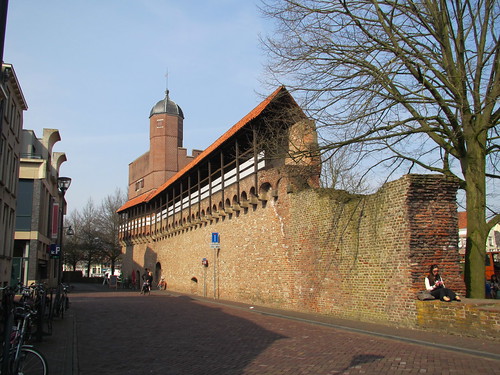
Zwolle is a typical Dutch city.  However, is this not a canal; this is the mote that surrounds the old city.  Throughout the town, you can see parts of the old fortress, the keep, and several other structures.  ArtEZ: Zwolle is actually in the old cloister just behind this tower.


After school we took a walk around town.  This is a typical cheese shop, there are serval just like it.  I am looking forward to a very fruitful year.

Thursday, August 30, 2012

Creating Awe: TED and the Netherlands

A few weeks ago TED's Podcast posted a lecture by Rob Legato. Rob helps create screen shots in movies; the TED Talk is more or less him bragging about his work on Apollo 13, Titanic, and Hugo.  It's truly remarkable how he and his team created three of the most beautiful screen shots in cinematographic history.  Interestingly, none of them are based in reality.

The obvious musical reference would be splicing performance to create an uncharacteristically clean recording. A second could be using electronic software to loop or modify your sound.  Another could be small breaths in irregular places creating unusually long phrases.  How many sneaky ways to "deceive" an audience can you think of?


Today, I visited another branch of the ArtEZ Conservatory.  The city of Zwolle is a stereo typical Dutch town straight out of the middle ages.  The modern city actually dates from around 800.  The structure of the school has some pretty good awe power.  ArtEZ: Zwolle sits in a renovated cloister on the edge of the city center.  (On the left in the picture above.)  I will be posting some more pics of Zwolle soon.

Back in Enschede, I heard the finally exam (recital) of Babis Vlachos an incredible saxophone player.  Besides the beastly alto playing, Babis performed one piece on the bass saxophone.  This was a rare treat.  Babis just finished his MM under Johan van der Linden.

Saturday, August 25, 2012

Europe: The day before

As many of you know, tomorrow I am leaving on trip to the Netherlands.  The catch - I have a one way ticket.  For the next two years, I will be studying with Peter van Klink of the Netherlands Symphony Orchestra at the ArtEZ Institute of the Arts in Enschede, NL.

For the past week, I have been at my parents house in south-western Virginia.  I have sold my car, finished the Discovering a Classical Music Project, published my arrangement of Avant de Quitter ces Lieux, and started the long process of packing.  I will be traveling with two duffel bags and a trombone.

I have no idea what will happen, where I'll go, what I will do, or what I will play on this, my next great adventure.

Saturday, June 2, 2012

My Favorite Teacher

Over the past few weeks I have had the opportunity to talk with all of my former teachers and a few former students.  I have realized a very important aspect of my relationship with these people.  All of them made me feel like their favorite student and I tried my best to make all of students feel the same way.  The interesting thing, I truly believe all of my students were my favorite.

John Rojak speaks about this particular aspect of his teaching consistently.  John Coffee, Rojak's teacher, had this quality in his teaching and thankfully his students are passing down the trend.

In modern educational theory, building relationships with your students is very important.  These relationships allow for communication and understanding in the classroom and a lasting impression in life.  These relationships not only help the student listen and understand the teacher, but allow the teacher to truly listen to the student.  A strong relationship with your students can drastically change the way you communicate with them and help them along on their quest to become peers.

Many many thanks to John Rojak, Pete Norton, Brad Edwards, Dave Ball, and Dave Day.

Current listening: Tower Music performed by the 2010 CCM trombone choir

Saturday, May 5, 2012

Creativity: Jonah Lehrer

As a fat kid at heart, I love finding justification for my laziness.  This morning, while reading the news paper, I found out about Jonah Lehrer.  Jonah is a writer about neuroscience and his new book is called Imagine: How Creativity Works. You should really check out his past works and appearances with various media outlets.

In our quest for perfect craft many classically trained musicians forget about the creative part of what we do.  By this I mean, our practice is deliberate and highly repetitive.  This is great for isolation of craft, but stifling for our creativity.  Think about all the ways we need to be creative.

Musically, we have to be creative to capivate our audience or intrigue our colleagues.

Physically, we have to be creative to overcome the difficulties of our instrument.

Entrepreneurially, we have to be creative in marketing ourselves.

Educationally, we have to be creative in how we teach ourselves and our students.

Communally, we have to be creative to inspire those around us.

Creativity is essential to being an artist or really a well rounded individual.  Jonah advocates allowing your mind to wander in order for individuals to salve problems.  His interviews include anecdotes of world renowned thinkers who do there best when relaxing.  He also includes some crazy statics about problem solving.  Check out his latest interview on the Colbert Report.  And also his interview about daydreaming.

A great summer activity: Be Creative.

Current listening: Of Monsters and Men Little Talks.  Relevant lyric, "We used to play outside when we were young and full of life and full of love."

Sunday, April 1, 2012

Bemidji: Artist in Residence in Review

Last week I had the great  honor of spending a week with my friends Sarah Paradis and Bill Kloppenburg while working with students at Bemidji State University in Minnesota.  Some of you might be wondering where that is, well take a right in the middle of nowhere (St. Cloud, MN) and drive three more hours.  Bemidji is actually the home of Paul Bunyan and the entire town is fascinated with his folklore. Everything from flanel to amazing pancakes to chopped lumber, and frozen lakes can be found in the incredibly beautiful town.


While in residence at BSU I gave a recital, masterclass, lessons, a lecture, and soloed with the community trombone choir.  Everyone was excited and we completed some great work.  I was surprised at the level of students, Sarah is doing great work with some gifted youngsters.

Talking about phrasing and style with Steve Radley

The Bemidji Trombone Choir is actually a community trombone ensemble made up of musicians from over 80 miles away.  The concert went well and featured a variety of music including my first arrangement. The choir was kind enough to play Avant de Quitter ces Lieux from Gounod's Faust.  I scored the ensemble for 5 trombones and was surprised when I played infront of 12 musicians.  Needles to say, I am little closer to the goal (160dbs).

Sarah Paradis (Conductor) Russ Zokaites (Soloist)
Bemidji Trombones (Choir)


Sarah and I before an amazing night

Monday, March 26, 2012

Bemidji State University

This week I am serving as a guest artist at Bemidji State University in Bemidji, Minnesota.  The week is filled with rehearsing, teaching, and performing.  I am excited to work with the students and a community trombone choir.

The schedule:
Wednesday March 28th, 11:00am Masterclass
Wednesday March 28th, 7:30pm Recital
Thursday March 29th, 7:00pm Trombone Choir Concert.

(I will be teaching on all three days but they will be closed sessions)

The recital will include:
Lebedev's Concerto in One Movement
Bozza's New Orleans
Ewazen's Concerto for Bass Trombone
Gounod's Avant de Quitter ces Lieux
Inez McComas' A Quick Trip with Lots of Baggage


Sarah Paradis will be conducting the trombone choir in a variety of repertoire including an arrangement of mine.  I am truly excited to get to work this week!

The drive from Kansas City was anything but quick, 11 hours in one sitting.  Although it was nice to see the hills in Iowa, and the lakes in Minnesota.  Most people drive south for spring break, I however drove to the still frozen in North.

Tuesday, March 20, 2012

Question: How do you Maintain Motivation?

I have started a new segment for the 160th post on the 160 Project.  Last night, I emailed high level performs and asked them a question.  In this case:

Dear Gentlemen,

How do you continue to motivate yourself?  After many years of a high level of practice and performance how do you continue to push yourself?  How do you pull yourself out of a practice slump? 

Will Timmons: 

I was discussing this at dinner with another trombonist in the AF band.  The answer that I came up with is that you have to continue to increase what you strive for.  You must be a good planner with short-term and, most of all, long-term goals.  These big goals will be something like:  Perform at the ITA Workshop or release a CD of the highest caliber.   I feel like many people become settled in to a feeling of contentment and the day-in-day-out mentality of what their job requires.  Some musicians get a job that doesn't require the perfection that the audition circuit demands or that the trombone community has come to expect.  People become content not to be the best in the world.  I find that to be fine... not everyone needs to desire that.  But I never want to stop pushing myself to a higher standard, even when I reach the top. 


Many times, people just need a fresh perspective or an inspiring idea to push them forward.  Inspiration isn't automatic or consistent.  A few times in my life, I've been propelled by those around me.  As a member of the New World Symphony Orchestra, I was constantly around incredible young artists that were winning jobs in top tier orchestras.  Knowing that they and I were on equal ground every day, and seeing them win these auditions made me feel as if I could win one too.  That helped me dive in and do the work that needed to be done to get to my lofty long-term goal.


Sometimes seeing a great performance inspires you to go practice.  Many times, I practiced for hours following a big performance in orchestra or band back in college.  There's something fresh and exciting about performing in front of a crowd.  I used that to my advantage by allowing that energy and excitement continue into my practice session afterwards. 


Keep performing, keep striving for larger accomplishments, surround yourself with high acheivers, and eat, sleep, and breathe artistic excellence.  Always try to think on the highest artistic plane possible.  This will help one to stay creative. 


Will Timmons (Will is a member of the Air Force Ceremonial Band in Washington DC.)


RZ: But what happens after an audition, or performance, when you just want a day or week off but you have another audition in just a few weeks?


You have a choice to make.  In order to have long term sustainability you have to have times when you relax and let your body and mind rest.  So you have to decide when to take a break.  I think this goes back to the short-term planning and how it fits with the long-term planning.  If you stack your schedule so much that there's no down time before having to start on your next project (audition, recital, performance) then you might be limiting your chances of success.  It all comes down to planning.  Don't schedule yourself to teach 6 hours the day of your recital.  Don't schedule 11 recitals in 11 days. 


To clarify, I think it's okay to take multiple auditions fairly close together.  You probably don't want to have them constantly 2 weeks apart.  It's hard to sustain that.  It's best if you have auditions within the same week or spaced out by a month or more.  The 2 week time in between is just enough time that you are able to get out of the focused mindset that you were in for the first audition, but not enough time to get re-focused.  I think that's a mistake some people make.  But for some people, 2 weeks works okay.  It all depends on who you are and how you respond to certain situations.  

If you are smart about it though, you can plan your way to success.  Set yourself up for playing your best at the right time.  Timing is everything.  You need times of intensity but you need times to relax and rebuild (just like any great workout would suggest). 

Will Timmons

Thursday, February 23, 2012

Playing in a Section: Rope

I have been thinking about individual responsibility in section playing.  Most people would think this is a no brainer and relates to individual parts.  However, I am thinking about the next step.  How your part relates to everyone else's.  More so, how can your part make it easier for other people to play?

The other day in orchestra, we were reading a student composition and the tubist had two isolated whole notes.  These notes severed as the underlying harmonics for a short choral in the winds and brass.  The first time through, he put a huge breath right in the middle.  The second time he supported through the choral, making the whole orchestra sound better.  I doubt the other wind players noticed much of a difference, other than their parts sounded a lot easier with a more clear idea.

Fig. 1

Yesterday, I coached a high school trombone section through a choral.  All of them knew their parts but had little idea how their parts functioned within the section.  (B in fig. 1)  Slowly, as the listened to where harmonies changed or where other people had moving notes a more clear section sound emerged. (C in fig. 1)  

How does this make it easier for others to play around you?  The 1st trombone had an octave leap over a bar line, while the rest of the section repeated their harmony.  This should have been a huge energy creating moment, but the principal had to work so hard to play his octaves energy was lost.  Rather than ask him to push through the bar line, I had the other three musicians push through their parts.  In supporting their own lines, they were supporting the first trombone part, making his job much easier. (D in fig. 1)

One of my students mentioned this process was like twine being worked into rope.  Knowing your part is only the first step, knowing where everyone else's parts are going will help a section or entire ensemble know where they are going.  

Saturday, February 18, 2012

Time Passing

Time Passing

Click-Click-Click
Listen to the Metronome Tick
Keeping me honest
It's rhythm is the truest
It's movement isn't a trick

Marking the Passing of Time
In search of the Sublime
Each hour of Practice
Almost a Sickness
What to do in the Meantime?

Day by Day I am Waiting
For my career to start Blooming
Weeks and Months of Work
Trying not to go Berserk
While my craft I am Crafting

Months and Years
Counted by Beers
Celebrated Performances
And tender Smooches
Avoiding our Fears

10,000 Hours
While our lives it Devours
Attempting to be Perfect
I am an Addict
My playing left to Scours

More batteries in the Trash
Time flies in a Flash
Metronome, tuner, Recorder
The source of my Anger
Everyday I Rehash

The Passing of Time
The work of a lifetime
Practice for Hours
Passing this time of Ours
Is it a Crime?

~Russ Zokaites 2-18-12

Sunday, February 5, 2012

Performance: of an arrangement

The Carolina Trombone Collective will be playing an arrangement of mine tomorrow night at 7:30.  Colt Campbell will be soloing with Avant de Quitter ces Lieux.  This arrangement was the first thing I arranged and I am honored that the piece is receiving a performance.

The CTC is the trombone choir at the University of South Carolina.  Under the direction of Dr. Brad Edwards the ensemble gives a biannual concert of varying genres.   I was a member of the CTC while at USC.  This ensemble introduced me to trombone choir and captivated my interest in contemporary trombone literature.  The CTC lead to incredible collaborations with some very dear friends.

If you have time to spare tomorrow night and happen to be in SC check out the concert.  I am sure you will be please with the performance.

Saturday, January 28, 2012

Lohengrin: Rhythmic Fun

Wagner's Prelude to Act III of Lohengrin is notorious for time issues.  The main excerpt utilizes moving notes on the weak beats instead of the strong ones.


In the above excerpt you will notice moving notes on beats 2 and 4.  Try moving everything back one beat.  Essentially put your metronome on beat 2 and 4 instead of 1 and 3.  This will put the moving notes on strong beats.


Can you do it? Take beats away.  Only allow your metronome to play beat 4 (of the original).